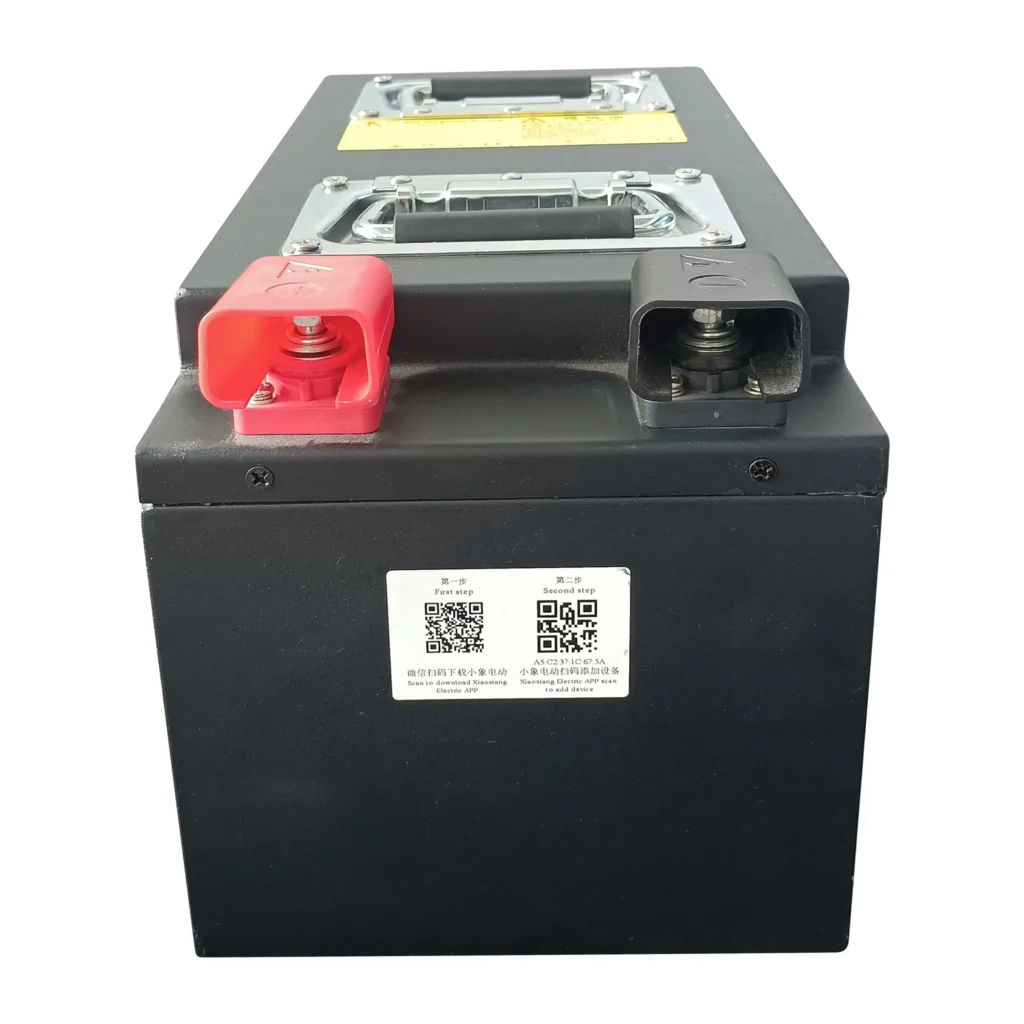
Choose between lithium-ion and sodium-ion batteries by comparing actual models against the same load, space, temperature and charging requirements. Sodium availability alone does not prove a lower pack price, and neither chemistry provides a blanket safety guarantee. Start with the requirements your system must meet.
Sodium Battery vs. Lithium Battery: An Overview
Lithium-ion covers several chemistries, including LiFePO4 (LFP) and nickel-manganese-cobalt (NMC). Their voltage, energy density and thermal behaviour differ. LFP’s comparatively stable cathode chemistry does not remove the need for a suitable BMS, fault protection and correct charging.
Sodium-ion cells use sodium rather than lithium as the working ion. This creates another material pathway, but a finished pack still needs electrodes, electrolyte, manufacturing, protection and qualification. Compare the available model and delivered system cost, not the price or abundance of one raw material.
Key Differences: Sodium Versus Lithium Batteries
Use the same comparison boundary: cell against cell or complete pack against complete pack. Keep the test temperature, discharge rate, usable capacity and end-of-life criterion attached to every performance figure.
| Feature | Lithium Batteries (Li-ion / LiFePO4) | Sodium Batteries (Na-ion) |
|---|---|---|
| Energy Density | Compare the selected chemistry and model; cell and complete-pack figures differ. | Compare actual usable Wh/kg and Wh/litre with the permitted installation space. |
| Cost | Model and manufacturing scale matter. LFP cathodes do not contain nickel or cobalt. | Abundant sodium does not guarantee a lower pack price than LFP; obtain comparable quotations. |
| Cycle Life | Use model data at a stated depth of discharge, temperature, rate and retained capacity. | Apply the same cycle-test conditions and end-of-life criterion. |
| Temperature Tolerance | Check charge and discharge limits separately; low-temperature charging can require heating or charge inhibition. | Some models support cold-weather operation; verify capacity, current and charging limits at the required temperature. |
| Commercial Availability | Established supply chains; confirm availability of the exact qualified configuration. | Confirm production status, lead time, documentation and support for the selected model. |
| Safety | Cell quality, electrolyte, BMS, enclosure and fault protection all matter, including for LFP. | Sodium-ion cells can contain flammable electrolyte. Do not describe the whole chemistry as non-flammable or inherently safer. |
A useful shortlist contains models that meet the same requirements. Eliminate options that exceed the available space, cannot support the load or lack the required charging-temperature range before comparing price and lifetime energy.
When to Choose Sodium Over Lithium?
Consider a sodium-ion option when a documented model fits one of these project conditions:
- Large-Scale Grid Storage: On/off-grid energy storage systems where the physical weight and footprint of the battery are less critical.
- Budget-Constrained Infrastructure: Projects where a current quotation demonstrates a lower total installed cost at the required performance.
- Extreme Environments: Projects with model-specific test data for charging and discharging at the required cold-weather temperature.
Retain a qualified lithium-ion option where its model data, supply arrangements and system integration already meet the project requirements. Typical areas to assess include:
- High-performance electric vehicles (EVs)
- Portable power systems and consumer electronics
- Long-duration, high-density industrial backup power
Make the Decision on Comparable Pack Data
Request nominal and usable energy, continuous and peak current, operating voltage range, charging limits, dimensions, mass, cycle-test conditions and the applicable transport and product documents. Calculate lifecycle cost using the same duty cycle and replacement assumptions. This produces a purchasing comparison rather than a prediction about which chemistry will win.
Hysincere develops and assembles battery packs using selected purchased cells. Send the application, load profile, charging sources, available space, temperature range and quantity. We can evaluate the pack requirements against the available models and identify the configuration and documents needed for your project.
Discuss Your Battery Project Requirements
Share the application, voltage, capacity, load, charging method, dimensions, temperature, certification, and annual-volume requirements for an initial technical review by Hysincere.
Lithium vs. Sodium Batteries: Which Technology Fits Your Energy Strategy FAQ
Are sodium-ion batteries always cheaper than LiFePO4?
No. Sodium abundance is only one input. Compare current quotes for packs with the same usable energy, current capability, protection, enclosure and delivery scope. Manufacturing scale and the rest of the system affect the final price.
Are sodium-ion batteries non-flammable?
No blanket claim applies. Sodium-ion cells can contain flammable electrolyte. Assess the actual cell and pack, including the BMS, fault protection, enclosure and applicable test documentation.
How should I compare cycle life and cold-weather performance?
Compare cycle data at the same depth of discharge, temperature, rate and retained-capacity endpoint. Check charging and discharging limits separately at the required temperature. A general chemistry label does not establish either a cycle-life guarantee or approval for cold charging.
This article is intended for technical reference and preliminary project evaluation. Battery compatibility, charging limits, current capability, temperature range, BMS behavior, certifications, and installation requirements vary by model and application. Final selection and system configuration must follow the selected product datasheet, equipment-manufacturer requirements, and system-validation results.